Looking for a job???

Head to the Job Search page and learn about employment opportunities in your area!

Need to build your resume???

Visit the Volunteer page for great volunteer ideas, click on the volunteer links in the navigation bar above!

Want to learn more about college and career options???

Head to CollegeInColorado.org to learn about your career interest areas, and the education that you'll need to pursue your dream job!

Thursday, July 2, 2015

Learning from TED Talks: Public-speaking 101

9 Public-Speaking Lessons From The World's Greatest TED Talks


Depending on your perspective, 2006 was either a really bad year for public speaking or the start of a world-changing transformation. In that year the famous TED conference began streaming 18-minute presentations from the world’s top minds for free. Today TED talks are viewed more than two million times a day and, in my opinion, they have become the gold standard in public speaking and presentation skills. It also means that, like it or your not, your next presentation will be compared to a TED talk.

During a trip to Paris last December I met with a group of young business professionals who said they were tired of speakers who gave “old school” PowerPoint presentations.

“What exactly would you consider ‘new’ school?” I asked.
“You know, like TED,” they said.

The South China Post newspaper recently reported that TED-style events are exploding in Hong Kong “in a big way.” Independently organized “TEDx” events are catching on across Asia. On a trip to Japan where I gave a keynote I was approached by several people who said, “We love the American style of speaking.”

“The American style?”
Yes, you know, like TED.”

FIND THE NINE LESSONS ON PUBLIC SPEAKING AT FORBES:
http://www.forbes.com/sites/carminegallo/2014/03/04/9-public-speaking-lessons-from-the-worlds-greatest-ted-talks/

Wednesday, March 18, 2015

How to Answer the Most Common Interview Questions


Wouldn't it be great if you knew exactly what a hiring manager would be asking you in your next interview?
While we unfortunately can't read minds, we'll give you the next best thing: a list of the 31 most commonly asked interview questions (and, of course, some expert advice on how to answer them).
While we don't recommend having a canned response for every question (in fact, please don't), we do recommend spending some time getting comfortable with what you might be asked, what hiring managers are really looking for in your responses, and what it takes to show that you're the right man or woman for the job.
Consider this your interview study guide.

Can you tell me about yourself?
This question seems simple, so many people fail to prepare for it, but it's crucial. Here's the deal: Don't give your complete employment (or personal) history. Instead give a pitch—one that’s concise and compelling and that shows exactly why you’re the right fit for the job. Start off with the 2-3 specific accomplishments or experiences that you most want the interviewer to know about, then wrap up talking about how that prior experience has positioned you for this specific role.

How did you hear about the position?
Another seemingly innocuous question, this is actually a perfect opportunity to stand out and show your passion for and connection to the company. For example, if you found out about the gig through a friend or professional contact, name drop that person, then share why you were so excited about it. If you discovered the company through an event or article, share that. Even if you found the listing through a random job board, share what, specifically, caught your eye about the role.

Find more of the most common interview questions, with detailed advice for each one:

Monday, December 1, 2014

270+ FREE, Professional Resume Templates for Microsoft Word!!!

Visit HLOOM's website and choose your next resume template from their vast selection of free Word docs!

From Basic to Modern, to ATS-Optimized, HLOOM has you covered with professional resume templates that are sure to impress your next employer.

The Biggest Mistakes I See on Resumes, and How to Correct Them

By Laszlo Bock, SVP People Operations at Google

I've sent out hundreds of resumes over my career, applying for just about every kind of job. I've personally reviewed more than 20,000 resumes. And at Google we sometimes get more than 50,000 resumes in a single week.

I have seen A LOT of resumes.

Some are brilliant, most are just ok, many are disasters. The toughest part is that for 15 years, I've continued to see the same mistakes made again and again by candidates, any one of which can eliminate them from consideration for a job. What's most depressing is that I can tell from the resumes that many of these are good, even great, people. But in a fiercely competitive labor market, hiring managers don't need to compromise on quality. All it takes is one small mistake and a manager will reject an otherwise interesting candidate.

I know this is well-worn ground on LinkedIn, but I'm starting here because -- I promise you -- more than half of you have at least one of these mistakes on your resume. And I'd much rather see folks win jobs than get passed over.

In the interest of helping more candidates make it past that first resume screen, here are the five biggest mistakes I see on resumes.

READ ABOUT THE FIVE BIGGEST RESUME MISTAKES HERE:
https://www.linkedin.com/pulse/article/20140917045901-24454816-the-5-biggest-mistakes-i-see-on-resumes-and-how-to-correct-them

Thursday, August 21, 2014

Email, snail mail, phone, social media: rules for connecting with a potential employer.

Carrie Holler, a former HR executive for Rodale Inc. in Emmaus, PA, remembers a woman “who wanted to work for us in the worst way. She sent her resume to everyone from Mrs. Rodale on down, and she called us all several times a week.”

On paper, the woman wasn’t a good fit for the family-owned publishing firm. “Her resume didn’t have enough horsepower,” says Holler. Just to get the woman to quit bugging everyone, Holler invited her in for an informational interview. To Holler’s surprise, “She turned out to be so likeable and enthusiastic that I actually ended up hiring her,” Holler says with a smile.

Though that job seeker’s example might tempt you to follow her lead, don’t—she was the rarest of exceptions, says Holler. In fact, speed dialing a prospective employer and filling hirers’ inboxes with emails rarely pays off, whether you’re hoping for an interview or following up on one. Professionalism and strategic communications will serve you much better, says Karen Lippman, a managing director for Howard-Sloan-Koller Group, an executive search firm in New York City.

>>Read the article and learn the new rules for connecting with your next employer: http://workreimagined.aarp.org/find-a-job/how-often-should-you-contact-a-potential-hirer/


Before and After - Improving a Real-life Cover Letter

Before Version

Here’s the before version. It reads like 95% of the cover letters out there. Like those other 95%, it basically says, “I know I need a cover letter, so here are some paragraphs of blah.” You can imagine multiple candidates for this position submitting this letter; there’s nothing especially personalized about it.

Dear Hiring Manager:

Your posting on LinkedIn for a Sales and Marketing Coordinator recently caught my eye, and I think you will find I am an exceptional candidate for this position.

I am an accomplished administrative professional and a junior in the Marketing & Management program at Riverrun University. Over the past ten years, I have provided high-level support in a variety of industries and across multiple functional areas. I am now seeking a position that will make the most of my administrative experience while offering additional opportunities for personal and professional development.

In exchange, I offer exceptional attention to detail, highly developed communication skills, and a talent for managing complex projects with a demonstrated ability to prioritize and multitask.

My accomplishments and qualifications are further detailed in the attached resume. I welcome the opportunity to meet with you and discuss the value that I can bring to your organization.

Warmest regards,

Catelyn Stark

After Version

Here’s the after version. It’s awesome. It tells us who the candidate is and why she’s great at what she does. And she’s genuinely enthusiastic. This isn’t a generic letter; it’s a letter about her.
>>
Read the 'After Version' at Alison Green's excellent career advice blog: 
http://www.askamanager.org/2014/02/heres-a-real-life-example-of-a-great-cover-letter-with-before-and-after-versions.html

Objective Statements Out, Executive Summary's In

Are you “looking to obtain a challenging position that will facilitate your work ethic”? “Seeking to obtain this challenging position in,” oh, let’s say the music industry? Perhaps you want to win “this challenging position that will utilize your expertise and education.” In other words, your objective is to get a job.

The recruiters and hiring managers who received your resume already knew that. That’s why you sent them your resume. Professional resume writers call this the “Duh! Factor.”

Unfortunately, it’s also the core of an old-fashioned objective statement.

Besides being self evident, an objective statement focuses on the farthest thing from hiring managers’ minds: your personal satisfaction. Instead of telling employers what’s in it for them, you’re telling them what you’ll get out of the deal (a job). That’s just bad marketing.
>>
Read the article here, and find out how you can improve your resume with an executive summary:
http://www.theladders.com/career-advice/trade-up-to-executive-summary

Avoid These Words When Drafting Your Resume

When it comes to looking for a job, what you don't say can be just as important as what you do say. Here are nine phrases and words to leave off your résumé.

Try   

Try simply shows a lack of belief, passion, commitment, and confidence — all the qualities you need to succeed in today's tight job market. While try is the most dangerous word that an employee or job seeker can use in the workplace, there are certainly other danger words that also indicate negativity, uncertainty or controversy at work and can also doom your chances of getting (or keeping) a job. – Brad Hoover, CEO of Grammarly

Clichés

Don't use common buzzwords such as innovative, team player and results-oriented. These and others are so overused that they're now seen as clichés and have lost their impact altogether. Rather, list specific accomplishments. Instead of saying you have extensive experience in sales, note that you've worked in sales for 10 years, hit your quota the last 12 quarters and note specific deals you've closed. As a hiring manager I want real details of past jobs, such as how many people you supervised or specific ways you helped increase profitability.— Darnell Clarke, author of self-published "Employmentology: A Practical Systematic Methodology of Finding Employment by a Hiring Manger"
>>
Read this article in its entirety at: http://www.businessnewsdaily.com/4004-words-to-avoid-resume.html

Should You Call That Potential Employer?

I often hear people say that you should always call after you send your resume to ask if it was received, to build rapport and get noticed; this post recommends that you follow up once a week for a month before moving on (which is a lot, I think). On the other side of the argument, HR expert Susan Heathfield calls these phone calls ‘Fishing for attention’ calls and resents this waste of her time, saying this is a way of making a very bad impression.

There’s lots of conflicting answers about follow up calls, but I didn’t realise what a contentious issue it was until I read this post. In the comments, a HR professional said she hates getting these calls and that “no one appreciates being constantly interrupted by unimportant phone calls to check on whether a resume was received or not.” Vitriol from job seekers rained down upon her head. I think she underestimated the emotional impact of her words. People call about their resume because they really want or need a job and they don’t want to be told that issue is unimportant.

We understand that sometimes you just desperately want to know the progress of your job search. As such, we’ve got ten do’s and don’ts about calling to chase up your job application.

>>
Get the ten do's and don'ts at: http://www.10collective.com.au/calling-your-potential-employer-10-dos-and-donts/#sthash.3tceMJb9.dpuf

Monday, April 14, 2014

The 40 Highest-Paying Jobs - Bachelor's Degree Not Required

Check out these occupations - whether you're in pursuit of a college degree or not, they're worth looking at!


Wednesday, April 2, 2014

College Debt - How much will you end up with?

This interesting article at CNNMoney addresses the realities of college debt for recent, and future, graduates.  The interactive map will give you an idea of the average debt for college grads in your state of choice.

The debt map over at the Project On Student Debt will give you a clearer picture, allowing you to see the average debt for grads at specific schools within each state.

Want to reduce your college debt?  There are steps that you can take - check out the helpful tips that Kiplinger provides in their article 9 Ways to Reduce Your Student Loan Debt after graduation.  Fastweb offers great advice on minimizing college debt while in school.

The good news - you don't have to be the average college student when it comes to debt!

Thursday, March 20, 2014

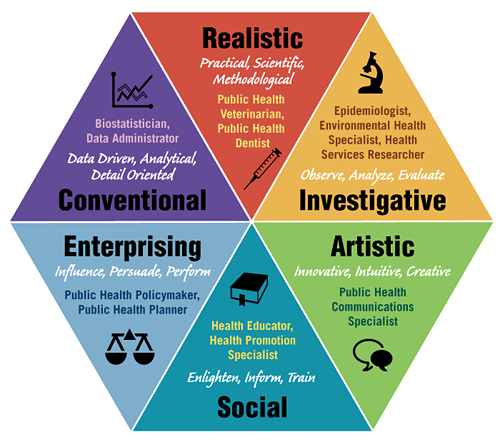
What's your Holland Code?

The Holland Code can be a very useful tool when it comes to learning about your work personality type.  Your work personality type can help you determine which careers would be a better fit (or the best fit) for your long-term career success and happiness.  Paying attention to who you are - how you seem to enjoy certain types of work better than others - can truly make a difference in the experience that you have in the workplace.

Identify your Holland Code using one (or both) of the surveys below:
Work Interest Personality Survey #1
Work Interest Personality Survey #2

Now check out the Holland Code descriptions here, and see if you can identify your top two personality types.

Finally... Visit O*Net Online and start searching for a career that matches your top personality types (Holland Code).  Start with your top personality type, and then plug in your second type to narrow the list.

Best of luck!!

Wednesday, September 11, 2013

What are your priorities?

Use this very helpful Prioritization Grid to discover what you truly care about most.  The grid can be used to prioritize your career interests, work values, personal interests, college major options, goals - you name it!  Just follow the directions provided on the website.  

Tuesday, May 7, 2013

Moneyball at Work: What Really Makes a Great Employee

Employers are starting to rethink the ways in which they look at potential employees, and are taking steps to change the hiring game entirely.  How are they doing this, and why?  Check out this article and see if you're ready to hit the playing field, or if you'll be watching the superstars from the bench:

Read the article at: MONEYBALL AT WORK

Monday, March 4, 2013

Think a career in Accounting is boring?

Here is a list of five very interesting accounting careers, for those financial math lovers out there!  Check out Yahoo!'s 5 Surprising Accounting Careers post for more information.

Friday, February 22, 2013

Career Research Questionnaire


Click HERE to download and complete the Career Research Questionnaire!


WARNING: when you open this in Microsoft Word 2010, you will have to click on "Enable Editing" in the yellow ribbon at the top!!!

Sunday, February 3, 2013

Is a College Degree Worth the Investment?

Read this article from the US News Education section, and weigh the benefits and the costs for yourself: "Finding the Value in a College Degree"

Then...check out the College Degrees that promise more bang for your buck: "College Majors with the Best Return on Investment"

10 Worst College Majors? 10 Best Majors?

Follow these links and see what you think of Kiplinger's advice on the: 10 Worst College Majors, and the 10 Best College Majors

Will You Attend the College of Your Choice?

Are you on track?  Do you have the GPA and ACT scores needed for acceptance into the college of your choice?  Check for yourself: Colorado Higher Education Index Score Calculator or check the Score Matrix here.

Although there are other factors that may get you into the college of your choice, most Colorado public institutions look to your Index Score to determine whether or not you are college-ready.  It never hurts to apply to your college of choice, but be prepared to hear that you may need to attend a community college for at least one semester, should your index score not meet your dream college's standards.

Monday, April 16, 2012

Interview Tip: Research!!!

Employer Research Tips

Before you go to that interview, be sure you first do your homework!  Using the tips below, you can learn quite a bit about the company that you are applying to before sitting down with an interviewer.


Start with the job description
The organization will expect you to have read through the job specification before you apply, let alone before the interview. Check it thoroughly and glean information on your department or function area.

What are the recruiters really looking for? How do your skills and experience match up to that?

Use the Internet
Go to the organization’s website and read up on it. Browse other sites – like news sites and social networks – for other mentions of the company. What is it known for? What is its reputation? Where is it heading?

Look at your interviewers’ profiles on the company website and social networking sites. What are their responsibilities within the business? Is there anything relevant in their career background? What projects do they lead? Which business areas are they interested in?

Get on the phone
Call the organization’s HR department or reception and ask about the company, the role, the department, and how the business is going.  Sometimes you’ll be amazed at how much information they have and are willing to share.

Connect through LinkedIn
Use LinkedIn to find people within the business, what they do and perhaps they’re happy to have a chat with you. Check your own connections and even your shared connections for greater access to people. Use LinkedIn’s introductions function to ask a connection for an introduction to one of their connections.

Use your connections
If you have a connection that will help you find inside information, use it. Do you know someone who works there? Ask them if they can help. If you're a college grad ask your Career Office if they can give you a list of alumni who work there. Then call or email and ask for assistance.

Seek out career advice
Use sites like WetFeet (http://www.wetfeet.com/advice-tools) to touch up on your interview and job hunting skills. These sites will answer some of your biggest questions, such as: "Should I use Facebook as a job-seeking tool?"..."How can I use Twitter to spot a job opportunity?"

Read more at: http://jobmob.co.il/blog/company-research-tips/#ixzz1sGYM1AAC
and http://jobsearch.about.com/cs/employerresearch/a/companyresearch.htm